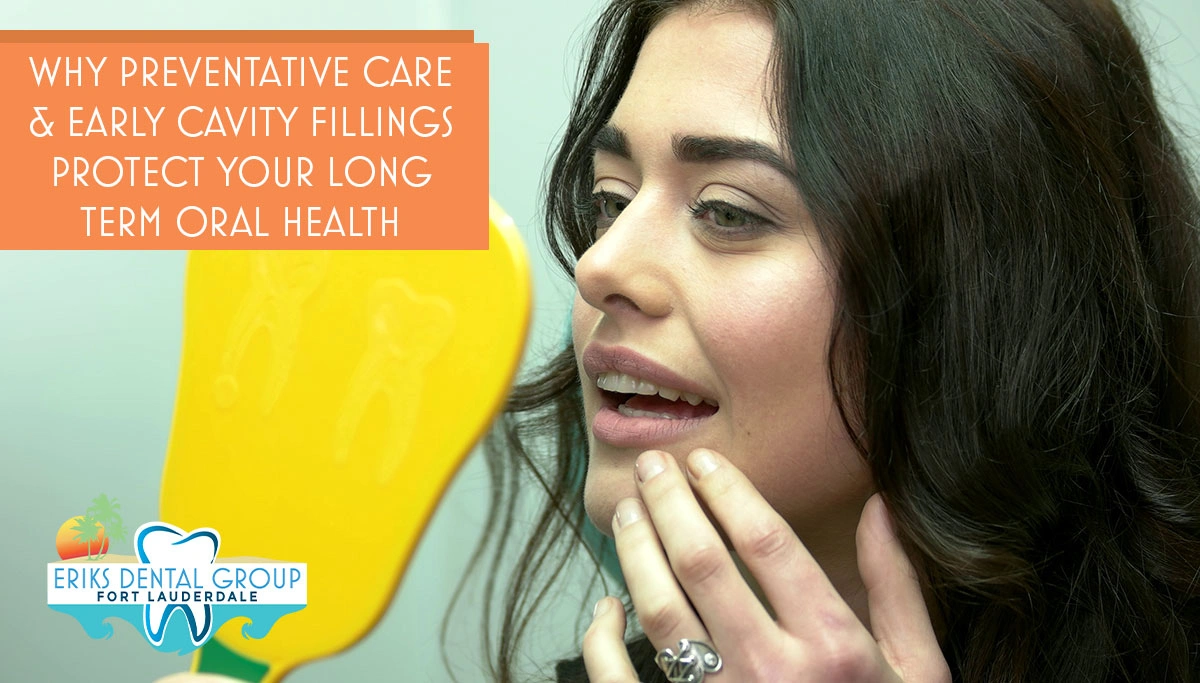
You probably only think about the dentist when something in your mouth hurts. The trouble is that tooth decay usually starts quietly. You can have a cavity forming for months before you feel any pain. By the time it hurts, the damage is often much deeper and more expensive to fix. That is why preventive care and early cavity fillings are critical. They protect your smile and your budget.
In this article, we’ll explore how preventive care works, why early cavity fillings are crucial, and what you can do to keep your teeth healthy.

Preventive care is everything you and your dentist do to stop problems before they become serious. It focuses on early detection and early treatment.
Preventive dental care includes:
During a routine visit, your dentist does more than simply clean your teeth. They look for the earliest signs of tooth decay, gum disease, worn enamel, cracked teeth, and issues with existing fillings or dental crowns. When problems are found at this stage, simple treatments such as small cavity fillings often solve them completely.
Understanding how cavities develop makes it clear why early treatment matters. Here is a breakdown of the process of a cavity forming.
After you eat or drink, especially sugary or starchy foods and drinks, bacteria in your mouth feed on those particles. They form a sticky film called dental plaque that clings to your teeth.
The bacteria in plaque produce acid. Over time, these acids begin to weaken and dissolve the enamel, which is the hard protective outer layer of the tooth.
Once the enamel is damaged enough, a small hole forms. This is the beginning of a cavity. At this stage, many people feel no pain at all.
If the cavity is not treated, the decay continues to move inward toward the softer dentine and then into the pulp which contains nerves and blood vessels. This is when you may start to feel sensitivity, sharp pain, or swelling.
When decay reaches the pulp, treatment is no longer a simple filling. You may need root canal therapy, a crown, or even an extraction. Early cavity fillings stop this progression and keep treatment simple and predictable.

Early cavity fillings offer several benefits for your future oral health. Here are some examples.
Small cavities require small cavity fillings. The dentist only needs to remove a limited amount of tooth structure and replace it with a durable filling material. Your tooth remains strong and stable.
If you wait, the cavity becomes larger and deeper. That means more drilling, more tooth structure removed, and sometimes the need for larger restorations, such as inlays, onlays, or crowns. Preserving natural tooth structure is always the best option.
Cavities do not stay painless forever. Once decay reaches the nerve, you can develop a severe toothache, sensitivity to hot and cold, and even infection or abscess. These are the problems that can keep you awake at night and disrupt work, school, or family life.
Early cavity fillings stop decay before it reaches the nerve, which means you avoid that intense pain and the risk of infection. For busy Florida families, that is a major advantage.
A small filling is one of the most cost-effective dental treatments. In contrast, advanced decay often leads to root canal treatment, crowns, or extractions followed by bridges or implants. These procedures cost significantly more and may require multiple appointments.
By choosing preventive care and early cavity fillings, you invest a smaller amount now to avoid much larger bills later. Many dental plans give better benefits for preventive treatments than for major restorative work, which makes early care more affordable.
Visible decay, broken teeth, or missing teeth can affect how you feel when you smile, speak, or meet new people. Early treatment keeps your teeth looking natural. Modern tooth colored cavity fillings blend with your enamel, so most people will not even notice that you have had dental work.
People feel nervous when they hear the word “filling”, but cavity fillings today are quick, gentle, and predictable.
A typical visit for small fillings will look like this:
Sugary, high-starch, and acidic foods can damage your teeth over time, increasing the risk of cavities. However, there are easy ways to ensure you protect your teeth.
Combined with early cavity fillings when needed, these habits will support strong, healthy teeth for many years.

Preventive care and early cavity fillings are essential for protecting your long-term oral health, ensuring your comfort, and preserving your finances. By combining regular check-ups, good home care, and prompt treatment for small cavities, you can avoid many of the serious dental problems that cause pain and stress.
If it has been a while since your last dental visit, consider this your reminder. Request an appointment with Eriks Dental Group in Fort Lauderdale, ask about preventive dental care, and address any cavities early. Your smile will thank you!

© 2026 Eriks Dental Group - Fort Lauderdale - All Rights Reserved. Dental Website Design by Connectica