Did you know that just under 14% of the global population consists of adults over the age of 60? This demographic shift, coupled with increased longevity due to advances in medicine, increases the likelihood that people over 50 will require some form of dental restoration during their lifetime.
Dental care for older adults requires different considerations than when treating young people. Long-lasting dental restoration isn’t just about fixing damage, it is also about improving comfort and confidence. Your family dentist will assess your needs and ensure that you understand each restoration’s strengths, limitations, and purpose so that you can make an informed decision.
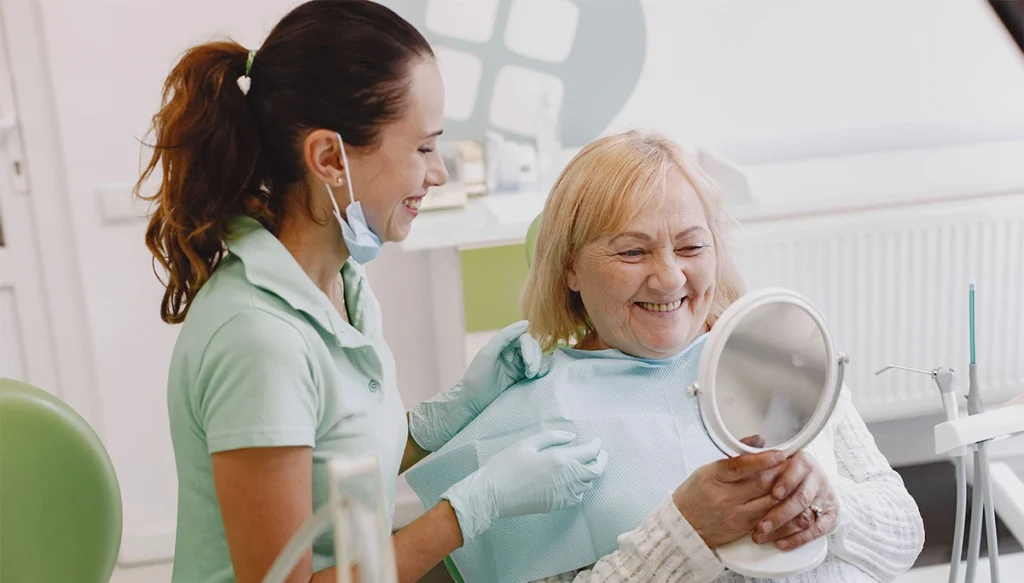
Dental restoration services offer a range of options that can significantly enhance the quality of life for seniors. In many cases, it requires a holistic approach involving patients, caregivers, dental professionals, and both public and private healthcare sectors. Below are the most common dental restorations.
When teeth suffer minor decay or damage, fillings provide an effective solution. They restore strength and prevent further deterioration. This quick and versatile treatment helps preserve natural teeth and maintain oral health.
Choosing the right material depends on the location and severity of the tooth damage. Common materials include amalgam and composite.
Dental implants are one of the most effective solutions for replacing any missing teeth. They provide a permanent option that looks and functions like natural teeth while integrating with the jawbone for exceptional stability.
During the procedure, a titanium post is placed in the jawbone, which acts as a root for a replacement tooth. Implants also help preserve jawbone density and prevent further dental issues.
Although implants have a higher upfront cost and require a longer healing period, their longevity and functionality make them an excellent long-term investment.
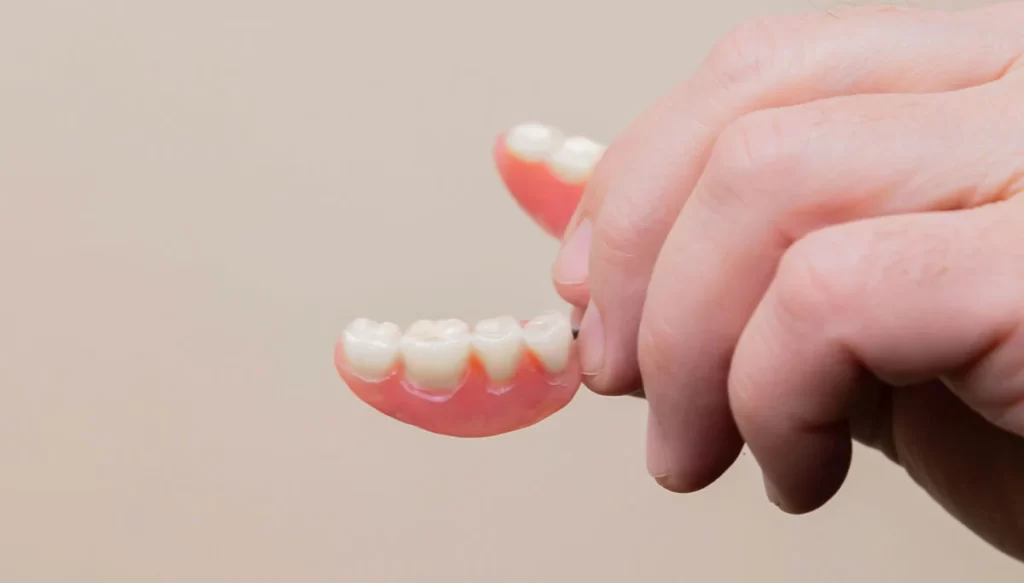
Dentures have become more lifelike and comfortable than ever before. They are an excellent choice for seniors who have lost multiple teeth. These removable appliances restore function and improve the ability to eat and speak with confidence.
Missing teeth can affect speech, chewing, and confidence. Bridges close gaps created by missing teeth and improve oral function.
They consist of one or more artificial teeth anchored to adjacent natural teeth or implants. Bridges also help maintain facial structure and prevent remaining teeth from shifting.
Dental crowns cover damaged or weakened teeth that cannot be restored with fillings. They provide strength while improving appearance and are particularly beneficial after root canal treatment.
They are ideal for teeth exposed to heavy chewing forces such as molars.
Veneers are a minimally invasive, non-surgical option used to improve the appearance of teeth. They can correct discoloration, chips, cracks, minor misalignment, and worn or shortened teeth.
They are also useful for closing small gaps that may develop with age. Not to mention that veneers can significantly enhance a smile and boost self-esteem.
When a tooth’s pulp becomes infected, a root canal may be necessary to save it. This procedure involves removing infected tissue and sealing the tooth to prevent further damage.
With modern anesthesia, the procedure is comparable to having a filling and helps preserves your natural tooth.
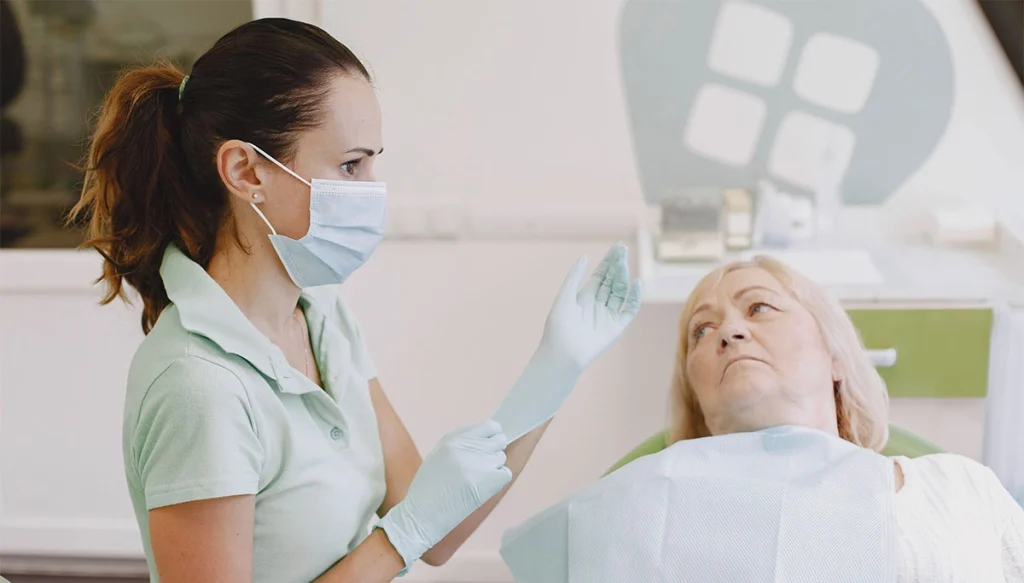
Older patients require a shift from purely aesthetic concerns to a more holistic approach that considers medical conditions, dexterity, and long-term maintenance.
Patients with dementia or Alzheimer’s, may benefit from simpler, low-maintenance treatments.
Often caused by medication, dry mouth increases the risk of decay, especially on exposed roots.
Systemic conditions like osteoporosis or uncontrolled diabetes can impair healing and implant success.
Arthritis and similar conditions can make oral hygiene more difficult to maintain. Simpler restorations may be preferable.
Receding gums expose softer root surfaces that are more prone to decay. Minimally invasive treatments like Atraumatic Restorative Treatment (ART) may be recommended.
(ART) uses hand tools instead of drills and is widely used in pediatric dentistry and when treating elderly patients, who often struggle with more invasive dental procedures.
While porcelain offers aesthetics, materials like composite or gold may be more practical for patients with grinding (bruxism). Direct restorations are also easier and less expensive to repair than indirect restorations, such as crowns.
There are many ways to take care of your mouth after you’ve undergone any restorative dental work. To get the most from your chosen procedure, make sure to do the following:
By addressing dental issues early and choosing appropriate treatments, older adults can maintain healthy, functional smiles well into later life.
If you would like to find out more about dental restorations, make an appointment at Eriks Dental Group. We offer comprehensive dental care for patients of all ages in Fort Lauderdale.
Get the confident smile you deserve. Call 954-463-5051 to schedule a visit with Dr. Eriks and his team today!
© 2026 Eriks Dental Group - Fort Lauderdale - All Rights Reserved. Dental Website Design by Connectica