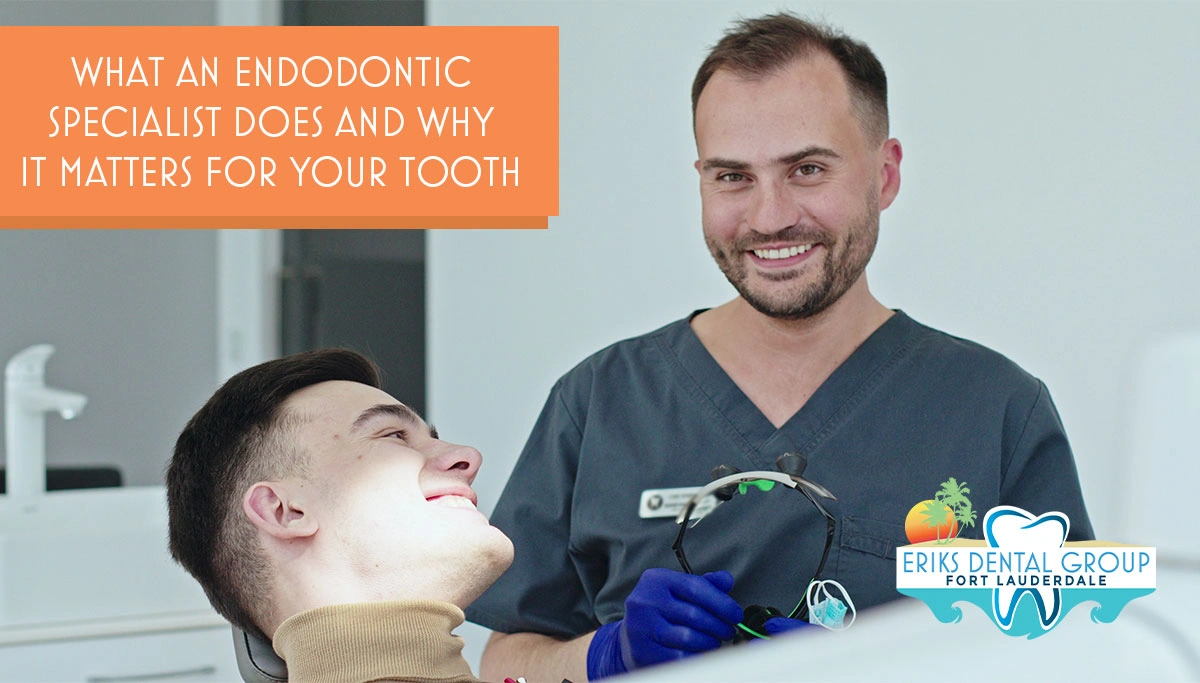
Tooth pain is a common symptom experienced by patients of all ages, but is often misunderstood. Not all dental problems can be solved with dental treatments such as fillings or crowns. An endodontic specialist focuses on preserving a patient’s natural teeth by diagnosing and treating conditions that affect the inside of the tooth. Their specialized training plays an important role in relieving pain, protecting oral health, and supporting long-term dental function.
Endodontics is a dental specialty that is focused on the inside of the tooth, including the pulp, connective tissue, nerves, and root canals. An endodontic specialist’s training allows them to diagnose and treat diseases effectively and also save teeth. They use advanced technology, including 3D imaging, to treat tooth pain efficiently.
Understanding the anatomy of a tooth helps you better understand why an endodontic specialist is necessary for many dental problems
A healthy tooth consists of three layers:

Root Canal Therapy
Endodontic therapy, also known as a root canal, is necessary when a tooth is severely decayed and has reached the pulp. A root canal may be necessary if:
Endodontic Retreatment
When a previous root canal fails, re-treatment is important. This can occur because of delayed crown placement, missed canals, or reinfection. An endodontic specialist can retreat the tooth to resolve the tooth pain.
Apicoectomy (Root-End Surgery)
This dental procedure saves a tooth from a failed root canal by removing the infected root tip and sealing it off properly. A small incision is made in the gum to access the root, and the infected apex is removed. A filling is placed to seal the root canal completely.
Traumatic Dental Injuries
Accidents happen, and sometimes they may cause broken, cracked, or dislodged teeth. An endodontic specialist can promptly treat these teeth by stabilizing and repositioning them to have a greater chance of saving them. They can perform dental procedures that can allow immature roots to keep growing after this trauma.

An endodontic specialist has more expertise in complex cases than a general dentist. They use advanced technology like digital x-rays to closely examine the inside of a tooth. Because of their added knowledge, there is a greater success rate in root canal procedures.
By saving teeth, chewing and biting are more functional while the jawbone and natural appearance are preserved. It also prevents the shifting of the surrounding teeth and prevents the need for a bridge and dental implants.

When you visit an endodontic specialist, you will have a comprehensive and specialized oral health evaluation to diagnose and treat your tooth pain. An endodontic specialist will review your medical and dental history and discuss your current symptoms. A dental exam will be performed alongside advanced imaging that helps them identify cracks or hidden infections.
After they have determined a diagnosis, they will discuss your treatment options and answer any questions you have. Usually, if treatment is necessary, it is done immediately to eliminate the pain and also to save the tooth. They will explain post-treatment instructions and tips with you before you leave.
When it comes to your oral health, treating tooth pain quickly is important. Not only is it for your comfort, but it also prevents bacteria from spreading further and damaging your natural tooth. Specialized care from an experienced endodontic specialist ensures you get the proper diagnosis and treatment.
Modern endodontic care is effective and designed to preserve your smile. To schedule an appointment at Eriks Dental with our endodontic specialist, call us today at 954-463-5051 or schedule an appointment online.
© 2026 Eriks Dental Group - Fort Lauderdale - All Rights Reserved. Dental Website Design by Connectica