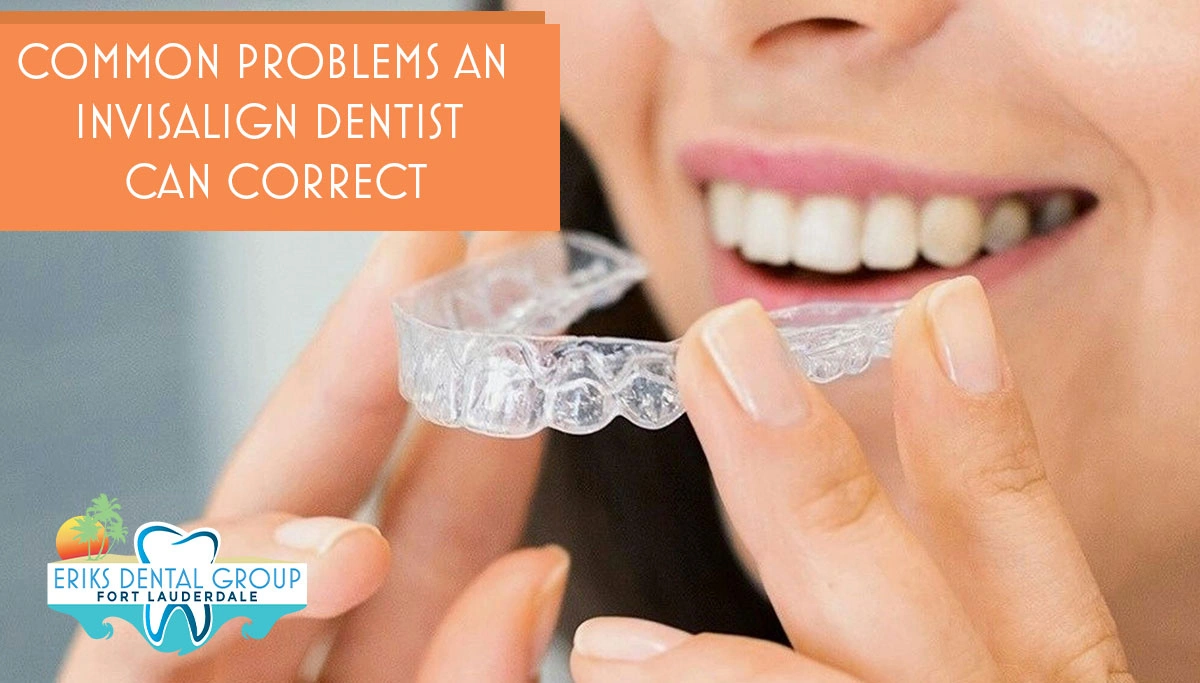
If you are unhappy with your smile but hesitant about metal braces, an Invisalign dentist can offer a discreet and effective solution. Many common alignment and bite issues can be corrected using clear aligners under professional supervision. An experienced Invisalign dentist evaluates your teeth and creates a personalized treatment plan to guide gradual, precise movement.
Keep reading to understand how Invisalign works and the common problems it can correct:
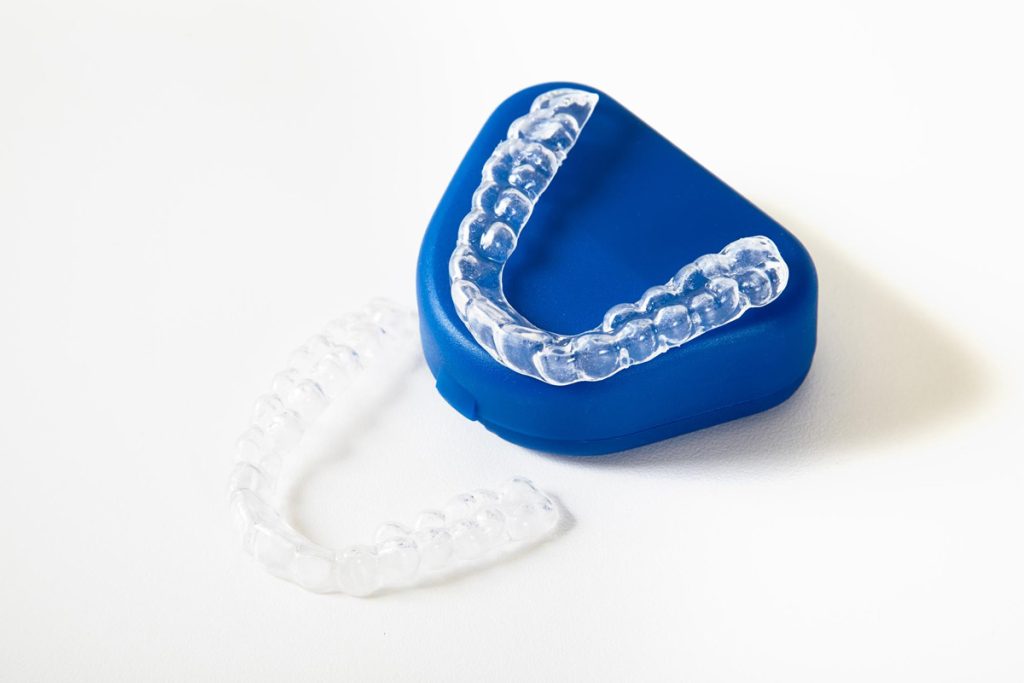
Invisalign works by using a series of clear, custom made aligners that gradually move teeth into better alignment. Each aligner is designed based on detailed digital scans of your teeth, allowing for precise and controlled movement over time. The aligners are worn for most of the day and are replaced every few weeks as the teeth shift into their planned positions.
An Invisalign dentist plays a key role in planning and monitoring the entire process. They evaluate your bite, tooth spacing, and overall oral health before creating a treatment plan tailored to your specific needs. Regular checkups allow the dentist to track progress, make adjustments if necessary, and ensure the teeth are moving safely and effectively.
Because the aligners are removable they allow for easier eating, brushing, and flossing compared to traditional braces. This flexibility helps patients maintain better oral hygiene throughout treatment while still achieving consistent results.

When planned and monitored by a qualified Invisalign dentist, clear aligners can correct a range of alignment and bite concerns that affect both appearance and oral health.
Here are some of the common problems they can correct.
Dental misalignment occurs when teeth do not line up properly or the upper and lower jaws do not meet as they should. This can be caused by genetics, childhood habits, injury, or uneven jaw development. Common forms of misalignment include overbite, underbite, crossbite, and open bite.
Overbites can be reduced by adjusting how far the upper teeth overlap the lower teeth, while underbites may be improved by repositioning the lower teeth. Crossbites and open bites are addressed through carefully planned movements that encourage proper tooth contact.
Correcting misalignment improves more than just appearance, it can reduce uneven tooth wear, improve chewing efficiency, and relieve strain on the jaw. With consistent wear and professional monitoring, Invisalign offers a predictable way to manage these bite issues.
Dental crowding happens when there is not enough room in the jaw for all the teeth to fit comfortably. Teeth may overlap, twist, or become pushed out of alignment as a result. Crowding often develops due to genetics or limited jaw space.
Invisalign addresses crowding by applying gentle pressure that gradually moves teeth into better positions. The aligners are designed to create space in a controlled way without the need for metal brackets or wires. Each stage of treatment builds on the last to achieve proper alignment.
Correcting crowding makes it easier to brush and floss effectively. This reduces the risk of cavities and gum disease caused by trapped plaque. Many patients also notice improved comfort and a more balanced smile once crowding is resolved.
Spacing issues refer to noticeable gaps between teeth. These gaps may result from missing teeth, extra space in the jaw, or teeth that are too small for the jaw size. While some gaps are cosmetic, others can affect oral health.
Aligners can be used to gradually close gaps by guiding teeth closer together. The treatment plan is customized to ensure teeth move evenly and maintain a natural appearance. Over time, the smile becomes more uniform and stable.
Closing gaps helps prevent food from becoming trapped between teeth. It also supports healthier gum tissue and better bite alignment. Proper spacing contributes to both long term dental health and improved confidence.
Teeth rotation occurs when a tooth turns or twists out of its proper position. This can happen due to crowding, delayed tooth eruption, or lack of space in the jaw. Rotated teeth can disrupt the appearance of the smile and affect bite function.
Invisalign aligners are designed to apply precise pressure to rotate teeth gradually. These movements are planned carefully to avoid discomfort and ensure predictable results. Advances in aligner technology have made rotation correction more effective than ever.
Properly positioned teeth are easier to clean and function more efficiently. Correcting rotation can reduce uneven wear and improve how the teeth fit together. This leads to better oral health and long term stability.
Orthodontic relapse occurs when teeth shift back after previous braces or aligner treatment. This often happens due to inconsistent retainer use, natural aging, or changes in bite pressure. Even small shifts can affect alignment and appearance.
An Invisalign dentist can correct relapse by realigning teeth that have moved out of place. Invisalign is especially useful for mild to moderate relapse because it targets specific problem areas. Treatment is typically shorter than initial orthodontic care.
While retainers are used to maintain alignment, Invisalign actively corrects existing movement. For patients experiencing relapse, Invisalign and dental implant offers a practical solution that restores alignment while maintaining comfort and discretion.
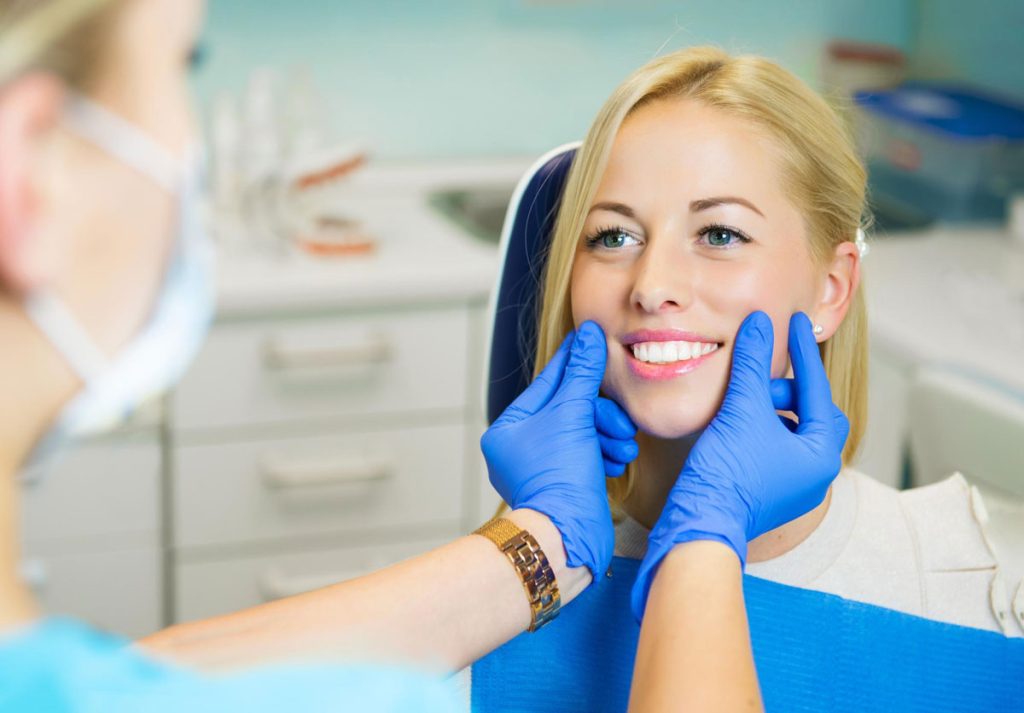
Choosing professional Invisalign treatment ensures your results are safe, effective, and long lasting. Working with an experienced dentist provides important advantages that at home or unsupervised options cannot offer.
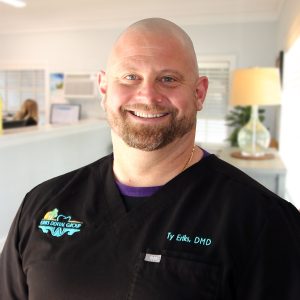
At Eriks Dental Group we offer the experience and personalized care patients can trust. With a skilled Invisalign dentist, advanced technology, and a patient focused approach, our team ensures each treatment plan is tailored for comfort, precision, and lasting results.
Whether you are dealing with crowding, bite issues, or orthodontic relapse, Eriks Dental Group is committed to helping you achieve a healthier, confident smile.
Schedule your consultation with us today and take the first step toward a straighter smile with expert Invisalign care.
© 2026 Eriks Dental Group - Fort Lauderdale - All Rights Reserved. Dental Website Design by Connectica